
March 31, 2025 · Fair Oaks Ranch Concrete
Why Concrete Sealing Matters in Texas (And How Often to Do It)
Texas heat, UV, and rain take a toll on concrete. Learn why sealing your concrete is essential in the Hill Country climate and how to do it right.
Texas is one of the harshest environments for concrete in the United States. Between the extreme UV index, triple-digit summer heat, heavy rain events, and occasional hard freezes, unsealed concrete in Fair Oaks Ranch and the Hill Country deteriorates significantly faster than in milder climates.
Concrete sealing is one of the most cost-effective maintenance steps you can take to extend the life of your driveway, patio, or pool deck.
What Sealer Actually Does
A quality concrete sealer creates a protective barrier on or within the concrete surface that:
- Blocks water penetration: Water is the primary driver of concrete degradation. Sealer prevents water from infiltrating the concrete matrix, where it can freeze, expand, and cause cracking.
- Protects against UV damage: Texas UV intensity causes concrete to fade, chalk, and become porous. UV-resistant sealers slow this process dramatically.
- Resists staining: Oil, grease, fertilizer, and organic stains bond much more easily with unsealed concrete. Sealed surfaces clean up easily.
- Protects colored/stamped concrete: For decorative concrete, sealer is not optional — it’s what keeps your investment looking good.
- Reduces dust and surface wear: Sealer hardens the surface layer of concrete, reducing dusting and surface abrasion.
Types of Concrete Sealers
Acrylic Sealers
The most commonly used residential sealers. Acrylic sealers form a film on the surface, are available in various sheen levels (matte to high-gloss), and provide good UV and water protection.
- Best for: Driveways, patios, general residential use
- Reapplication: Every 2–3 years in Texas climate
- Cost: $0.10–$0.25 per sq ft for materials (DIY); $0.25–$0.60/sq ft professionally applied
Penetrating Sealers (Silane/Siloxane)
These sealers soak into the concrete rather than forming a surface film. They don’t change the appearance of the concrete but provide excellent water repellency and are very long-lasting.
- Best for: Natural-look driveways, pool decks, natural stone areas
- Reapplication: Every 5–7 years
- Cost: Slightly higher upfront; lower lifetime cost
Polyurethane Sealers
More durable than acrylics, polyurethane sealers provide superior chemical and abrasion resistance. Often used in commercial applications or high-traffic residential areas.
- Best for: Garage floors, commercial walkways, heavy-use patios
- Reapplication: Every 3–5 years
Epoxy Coatings
Technically a coating rather than a sealer, epoxy creates a hard, glossy surface popular for garage floors. Not recommended for outdoor use in Texas — UV exposure breaks down epoxy relatively quickly.
How Often to Seal in the Texas Hill Country
Our climate accelerates sealer breakdown. General guidelines for our area:
| Sealer Type | Texas Reapplication Frequency |
|---|---|
| Standard acrylic | Every 2 years |
| Premium acrylic | Every 2–3 years |
| Penetrating silane/siloxane | Every 5–7 years |
| Polyurethane | Every 3–4 years |
The test: pour a few drops of water on your concrete. If the water beads up, the sealer is still working. If it soaks in within 30 seconds, it’s time to reseal.
When to Seal New Concrete
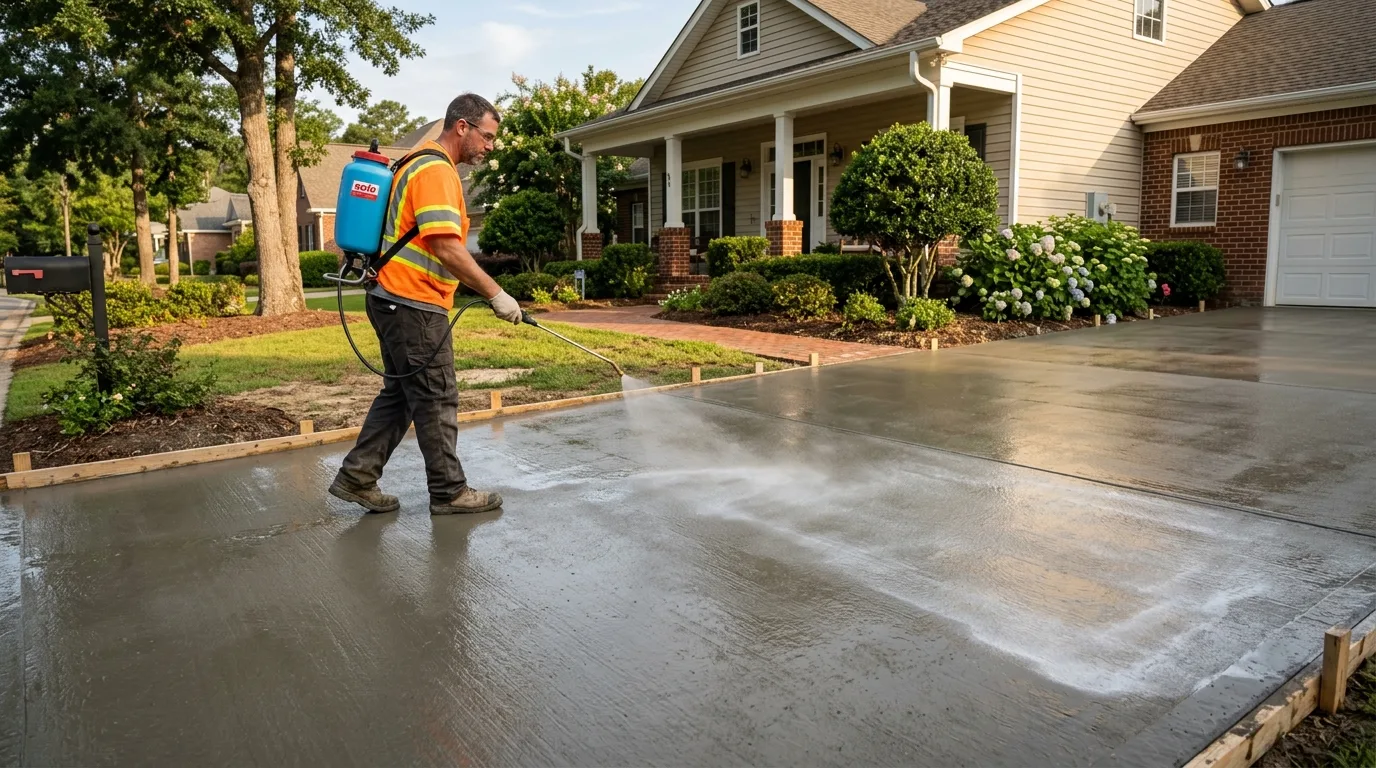
New concrete should cure for at least 28 days before sealing. Sealing too early traps moisture inside and weakens the surface. For new concrete poured in summer heat, wait a full 30 days.
DIY vs. Professional Sealing
Professional sealing ensures:
- Proper surface cleaning and preparation (crucial for adhesion)
- Correct product selection for your specific concrete and use case
- Even application without lap marks or puddles
- Appropriate coverage rate
For stamped or decorative concrete, we strongly recommend professional resealing to protect your investment.
Ready to Start Your Project?
Contact Fair Oaks Ranch Concrete for a free, no-obligation estimate. We serve all of the Texas Hill Country.